
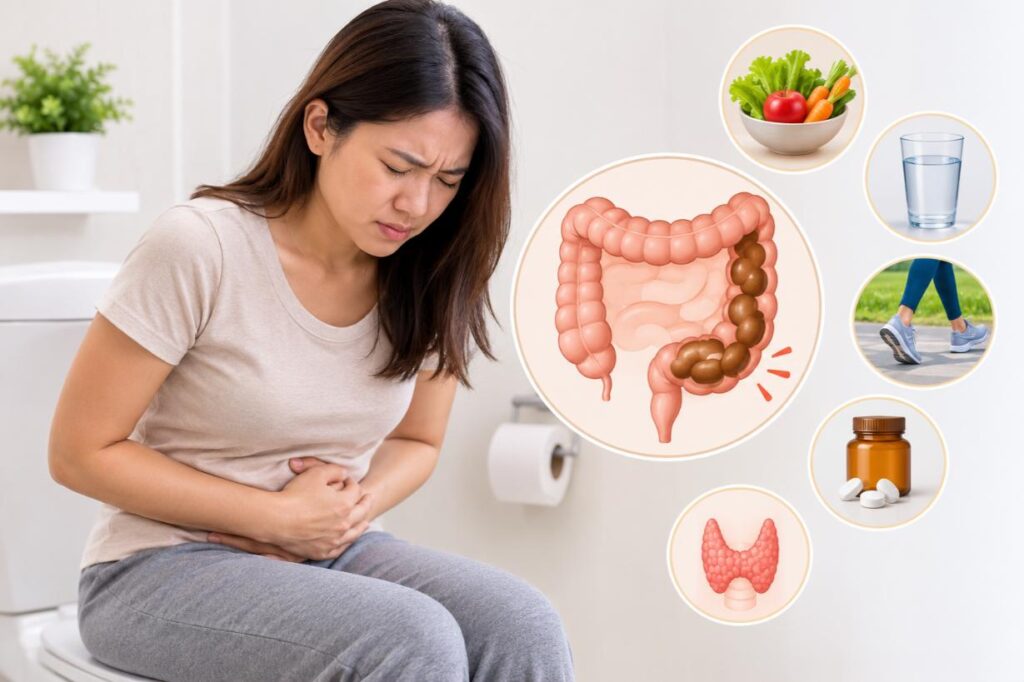
Chronic constipation means hard, infrequent or difficult bowel movements lasting three months or more. The most common causes are low fibre intake, not drinking enough, inactivity and ignoring the urge to go. Medications, an underactive thyroid, diabetes, pelvic floor problems and irritable bowel syndrome can also cause it. See a specialist if constipation is new after age 50, or comes with bleeding or weight loss.
Key takeaways
- Constipation is usually called chronic when symptoms have been present for at least three months.
- Frequency is just one sign: straining, hard stools and a feeling of not emptying fully all count.
- Everyday habits are the most common cause, but medicines and medical conditions play a part for many people.
- Some people have a problem with how the bowel or pelvic floor muscles work, which diet changes alone may not fix.
- New constipation after about age 50, bleeding, weight loss or anaemia should be checked by a doctor.
What counts as chronic constipation?
Constipation is chronic when it has lasted for at least three months. Doctors look at several features, not just how often you go.
You may have constipation if you often have two or more of the following:
- Fewer than three bowel movements a week
- Hard or lumpy stools
- Straining to pass stools
- A feeling that you have not fully emptied your bowels
- A feeling of blockage at the back passage
- Needing to press on your belly or around the back passage to help pass stool
Going less than daily is not a problem on its own. Normal bowel habits range from about three times a day to three times a week, as long as stools are comfortable to pass.
What are the most common causes of chronic constipation?
Most chronic constipation comes from a mix of diet, fluid, activity and daily routine. Medicines and medical conditions are the next most common causes, and problems with how the bowel works make up the rest.
| Cause group | Examples | What may help point to it |
|---|---|---|
| Lifestyle | Low fibre diet, not drinking enough, little physical activity, ignoring the urge to go | Improves when routine, diet or activity changes |
| Medicines and supplements | Strong painkillers with codeine or opioids, iron and calcium supplements, some antacids, some blood pressure medicines, some antidepressants and antihistamines | Constipation began or worsened after starting a new medicine |
| Medical conditions | Underactive thyroid, diabetes, high blood calcium, Parkinson’s disease, pregnancy | Other symptoms such as tiredness, weight change or thirst |
| Bowel function problems | Slow-transit constipation, pelvic floor dysfunction (dyssynergia) | Little response to fibre and fluids; heavy straining despite soft stool |
| Irritable bowel syndrome | IBS with constipation (IBS-C) | Belly pain and bloating linked to bowel movements |
| Structural causes | Narrowing of the bowel, anal fissure, bowel cancer | New change in habit, bleeding, pain or weight loss |
Busy Singapore routines often play a part. Long working hours, skipped breakfasts, meals heavy in white rice and noodles, and holding in the urge at work can all slow things down. Travel and changes to your routine can also upset bowel habits.
Can medications cause constipation?
Yes. Medicines are a common and often overlooked cause of constipation, especially in older adults taking several prescriptions.
Common culprits include pain relief containing codeine or other opioids, iron tablets, calcium supplements, some antacids, certain blood pressure medicines, and some medicines for depression, allergies, bladder problems and nausea. Do not stop a prescribed medicine on your own. Ask your doctor or pharmacist whether it could be contributing and whether there is an alternative.
What is pelvic floor dysfunction?
Pelvic floor dysfunction, also called dyssynergic defecation, happens when the muscles that should relax to let stool out tighten instead. The result is straining, a feeling of blockage and incomplete emptying, even when stools are soft.
This type of constipation often does not improve with more fibre or laxatives alone. It is assessed with specialised tests of how the back passage muscles work, and is often treated with biofeedback, a form of retraining guided by a therapist. Slow-transit constipation, where stool moves through the large bowel more slowly than normal, is another bowel function problem that a specialist can help identify.
What can you do at home to ease constipation?
For many people, small daily changes make a real difference. Try the steps below for a few weeks and see how your bowels respond.
- Increase fibre gradually: add wholegrains such as brown rice, oats and wholemeal bread, plus vegetables, fruit, beans and lentils. Raise fibre slowly over a couple of weeks to limit bloating.
- Drink enough water: fibre works better with enough fluid, and Singapore’s heat means you lose more water through sweat.
- Move more: regular walking or other exercise helps the bowel move.
- Set a toilet routine: the bowel is often most active after breakfast, so give yourself unhurried time then.
- Do not ignore the urge: holding it in regularly can make stool harder and the urge weaker.
- Improve your position: resting your feet on a small footstool so your knees are higher than your hips can make passing stool easier.
Over-the-counter laxatives can help in the short term, but talk to a pharmacist or doctor about the right type, and see a doctor if you need them regularly. Diet also shapes your gut bacteria, which is covered on our page on gut microbiome and health.
When does chronic constipation need a specialist?
See a doctor if constipation lasts more than a few weeks despite changes to diet and routine, or if you rely on laxatives to go. Your GP or a polyclinic is a good first step. A gastroenterologist is helpful when the cause is unclear, first treatments have not worked, or warning signs are present.
Seek prompt review if you notice:
- Blood in or on the stool, or black stools
- A new change in bowel habit after about age 40 to 50
- Unexplained weight loss or poor appetite
- Iron deficiency or anaemia on a blood test
- Severe or worsening belly pain, a swollen belly, or vomiting
- Constipation alternating with diarrhoea that is new for you
- A family history of bowel cancer or inflammatory bowel disease
A specialist may arrange blood tests, a colonoscopy to look at the lining of the large bowel, or tests of bowel movement and pelvic floor function. Bowel cancer screening is generally recommended from age 50 in Singapore for people at average risk. For a broader list of symptoms that deserve a specialist opinion, read signs you should consult a gastroenterologist. You can also book a consultation with a good gastroenterologist in Singapore.
Frequently Asked Questions
Yes. Many healthy people do not have a bowel movement every day. What matters is whether stools are comfortable to pass and if your pattern has changed from what is normal for you.
It can. Stress affects the gut-brain link and can slow the bowel for some people, while speeding it up for others. Our article on how stress affects digestion explains this connection.
Some types of laxatives are used long-term under medical guidance, but daily use should be discussed with a doctor. Needing them regularly is a sign that the underlying cause should be looked into.
Fibre does not help every type of constipation. If you strain heavily despite soft stools, or fibre makes you more bloated, you may have slow-transit constipation or a pelvic floor problem, which a specialist can assess.
Occasionally. Most constipation is not caused by cancer, but a persistent new change in bowel habit, especially after about age 50 or with bleeding, weight loss or anaemia, should be checked with a doctor.